
Patterns of cognitive-motor interference in patients with post-stroke cognitive impairment
Authors:
I. Hereitová 1; P. Hošek 1,2; D. Bludovský 3
Authors‘ workplace:
Department of Rehabilitation Fields, Faculty of Health Care Studies, University of West Bohemia, Pilsen, Czech Republic
1; Biomedical Centre, Faculty of Medicine in Pilsen, Charles University, Pilsen, Czech Republic
2; Faculty of Medicine in Pilsen, Charles University in Prague, Pilsen, Czech Republic
3
Published in:
Cesk Slov Neurol N 2026; 89(5): 303-312
Category:
Original Paper
doi:
https://doi.org/10.48095/cccsnn2026303
Overview
Aim: The study aimed to investigate the patterns of cognitive-motor interference in patients with post-stroke cognitive impairment (PSCI), compared to age-matched control groups with probable mild cognitive impairment (pMCI) and normal cognitive function (individuals with cognitive abilities intact; ICA). Methods: We recruited 28 patients (mean age ± SD: 63.4 ± 12.1 years) with PSCI for a cross-sectional study. The age-matched control group included 50 individuals, divided based on Montreal Cognitive Assessment (MoCA) scores into a pMCI (67 ± 10.3 years; MoCA ≤ 25) and ICA group (62.2 ± 8.5 years; MoCA ≥ 26). We used the usual walking speed to assess motor performance and the visual-verbal Stroop test to evaluate cognitive performance under different prioritisation conditions. The relative dual-task effect (DTE %) was calculated for each task to identify patterns of dual-task interference. Results: The DTE evaluation confirmed a decline in walking speed and an increase in performance on the Stroop test, regardless of prioritisation, in all tested groups. The groups demonstrated significant variability in DTE for walking speed with cognitive prioritisation (P = 0.0145). Cognitive-related motor interference (N = 17 across all groups) and cognitive priority trade-offs (N = 6 across all groups) were the most common patterns in gait prioritisation. Cognitive prioritisation led to greater differences in interference patterns, especially in the pMCI and ICA groups. The pMCI group showed an increased preference for cognitive facilitation (N = 8), compared to the ICA group, which displayed more cases of no dual-task interference (N = 11). Conclusion: The choice of cognitive prioritisation influenced the patterns of interference during dual-task performance among PSCI, pMCI, and ICA groups. Our study supports the use of dual-task paradigms with cognitive prioritisation as a tool to distinguish the progression between different levels of cognitive impairment.
Keywords:
stroke – Cognition – gait – interference – dual task
Introduction
Stroke remains a leading cause of disability worldwide [1]. The development of prevention strategies, effective care in stroke units, and timely reperfusion therapy has contributed to global improvements in stroke treatment outcomes. However, post--stroke cognitive impairment (PSCI) still remains one of the main factors influencing poor long-term prognosis [2]. PSCI is a broad term that encompasses the entire spectrum from mild cognitive impairment to dementia and includes cases with purely vascular pathology or mixed pathology [3]. These deficits result in increased healthcare costs due to frequent hospitalizations, extended rehabilitation, and long-term care [4]. Therefore, there is a pressing need for timely intervention and optimal prevention of PSCI [5].
Community mobility requires the ability to adapt to external environmental factors that increase the difficulty of walking, such as obstacle avoidance and time-critical tasks like crossing the street with a traffic signal [6]. PSCI can reduce the automaticity in attention allocation during walking, which may consequently limit mobility in community-dwelling stroke survivors [7]. This phenomenon is known as cognitive-motor interference (CMI), where performing two different tasks simultaneously (e. g., walking and a cognitive task) results in deterioration in one or both task performances [8].
Cognitive-motor interference involves shared neural networks between motor and cognitive functions. Cerebral imaging evidence shows functional and structural links between motor control and cognition, such as prefrontal and temporal brain areas activated during movement (e. g., bilateral superior frontal gyrus and inferior parietal lobule, right middle frontal gyrus and middle occipital gyrus, as well as left inferior frontal gyrus, presupplementary motor area, and inferior temporal gyrus) [9,10]. A vascular deficit in any of these structures can cause changes in cognitive and motor performance, manifesting as reduced automaticity during walking [11]. In PSCI, this may manifest during dual-task walking, characterized by altered prioritization of postural control and increased gait variability. Consequently, this raises the risk of falls associated with PSCI [12].
Concurrent performance of a cognitive and motor task can lead to various distinct patterns of cognitive-motor interference. The pattern of CMI depends on several factors, including the types of cognitive tasks, difficulty levels, instructions about prioritization, and the characteristics of the individual performing the task (e. g., cognitive and motor abilities, fear of falling, distractibility) [13]. The pattern of CMI has not yet been examined in relation to PSCI and the occurrence of probable mild cognitive impairment (pMCI) in prodromal stages. Dual-task-related changes in gait are considered a sensitive marker of the adverse effects of cognitive impairment on the highest levels of gait control [14]. Building on this evidence, the aim of this study was to investigate cognitive-motor interference in patients with PSCI compared to age-matched control groups with pMCI and intact cognitive abilities (ICA).
Materials and methods
Study design and participants
28 PSCI patients were recruited from the University Hospital in Pilsen after being discharged home from acute care or inpatient rehabilitation facilities. Inclusion criteria for the experimental group were as follows: hospital admission for ischemic stroke with symptom duration of at least 24 h and radiological confirmation (CT and/or MRI, as indicated); lesions located in a cerebral hemisphere or supratentorial cerebral lesions; diagnosis of PSCI and no dementia confirmed through neuropsychological assessment; cognitive function evaluation: Montreal Cognitive Assessment (MoCA) ≤ 25; Mini-Mental State Examination (MMSE) ≤ 24; Clock Drawing Test (CDT) ≤ 3; modified Rankin Scale ≤ 2; an ability to walk continuously for 14 m without assistance to advance the involved lower limb (assistive devices and bracing not permitted); and an ability to follow instructions and communicate verbally. The time since stroke onset was not considered an eligibility criterion for study participation. The study cohort comprised individuals who underwent dual-task assessment during the subacute (1–6 months post-stroke) and chronic stages (> 6 months post-stroke) following stroke onset. The mean time since stroke onset was 4.0 months (range: 1.0–24.0 months).
The age-matched control group consisted of 50 subjects, divided into two groups based on their MoCA scores: a group with pMCI (MoCA ≤ 25) and ICA (MoCA ≥ 26). As the MoCA is a screening measure, the resulting group allocation reflects a research-based operationalization of cognitive status and should not be considered equivalent to a formal clinical or neuropsychological diag-nosis. [15]. The selection process was conducted at the Faculty of Health Care Studies, University of West Bohemia, in Pilsen, Czech Republic. The inclusion criteria for the control group included being aged 45 years or older, being able to walk unaided without the use of mobility aids, and being capable of understanding and following instructions during testing [16]. Participants were excluded if they had musculoskeletal impairments affecting posture or gait (e.g., osteoarthritis), uncontrolled hearing or visual impairments, pre-existing or coexisting central or peripheral neurological diseases, cognitive or language impairments, psychiatric diagnoses, had undergone recent surgical procedures, or were taking medications that could affect cognitive function.
Procedures
Demographics, stroke characteristics (type, location, time since stroke onset, side of hemiparesis), and stroke interventions were documented. The National Institutes of Health Stroke Scale (NIHSS) was used to evaluate stroke severity [17]. MoCA [18], MMSE [19], CDT (according to Hendriksen) [20], Short Falls Efficacy Scale International [21], 36-Item Short Form Survey [22], and Barthel Index [23] were assessed.
The dual-task assessments were conducted in a clinical setting with the help of either a physical therapist or a research assistant. In all settings and combinations, the motor task was a 10-meter walk test (10MWT), performed under standardized conditions as described by Hosoi et al. [24], while the visual-verbal Stroop test served as the cognitive task. The dual-task assessment included the following combinations:
1. cognitive task performance;
2.motor task performance (10MWT) at a comfortable walking speed;
3.motor task performance (10MWT) at maximum walking speed;
4.simultaneous motor and cognitive task performance with prioritization of the cognitive task (cognitive prioritization);
5.simultaneous motor and cognitive task performance with prioritization of maximum walking speed (gait prioritization).
While the single-task cognitive performance was always assessed first, the other combinations involving a motor component were performed in random order to prevent bias. Each of the combinations 2–5 was repeated twice, and the mean of the two repetitions (weighted in the case of the Stroop test by the number of questions answered) was used as the final measurement for each patient.
The visual-verbal Stroop test was projected onto a board placed 3 m in front of seated participants during the single-task condition and 16 m from the start marker of the 10MWT test during the dual-task condition [25]. The visual-verbal Stroop test involved sequentially presented events of either congruent or incongruent color words (e. g., the word ‘‘yellow’’ shown in blue letters). The colors yellow, red, blue, and green were used. Participants were required to name the color in which the word was displayed rather than reading the text. The displayed events progressed automatically without stopping, with a time interval varying between 0.8 s and 1.2 s to prevent rhythmic patterning. The visual-verbal Stroop test lasted 30 s in the single-task condition while participants were seated. In the dual-task setting, the video was projected for the entire duration of the 10MWT. To prevent learning effects, six different versions of the visual-verbal Stroop test were used, with congruent and incongruent stimuli presented in random order. All tests were recorded on a video camera (Panasonic HC-V380, Kadoma, Japan), capturing participants‘ verbal responses to the color words on the screen. Performance on the cognitive test was expressed as a percentage of correct words.
Calculating the dual-task effect and determining the pattern of dual-task interference
Cognitive-motor interference is traditionally quantified by calculating the dual-task effect (DTE) on a particular outcome of interest according to the following formula [26]:
DTE = (dual task performance – single taskperformance) / (single task performance) × 100
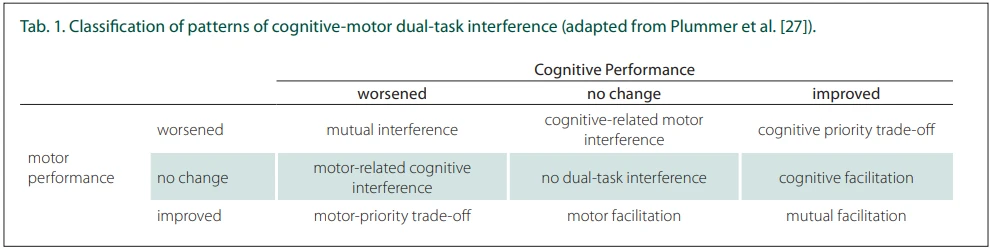
We calculated two sets of DTE values in our study: one for gait speed and the percentage of correct words with cognitive prioritization, and another for the same variables with gait prioritization. For each variable, negative DTE values indicate that performance worsened under dual-task conditions (i.e., dual-task cost), while positive values signify an improvement in the dual-task condition relative to single-task performance (i.e., dual-task benefit). As suggested by Subramaniam et al. [26], DTE values within the range of 0 ± 0.5 × standard deviation (SD) were considered non-interference (i.e., “no change”), whereas DTE values outside this range were classified as dual-task cost (worsened) or dual-task benefit (improved) concerning gait speed or the percentage of correct words in the cognitive task. After determining individual cognitive and motor interference, subjects were classified into one of nine pattern combinations, as specified in Tab. 1 [27]. Since the distribution of DTEs for the percentage of correct words in the cognitive task was highly asymmetric, a logarithmic indicator for cognition, “DTE log2,” calculated as a base 2 logarithm of the ratio between dual-task and single-task performance (limited to the range of ± 3), was used as an alternative, producing an inherently symmetrical expression of the relative change.
Analysis and statistical methods
A majority of quantitative variables were found to be significantly non-normally distributed (based on a Shapiro-Wilk test); therefore, nonparametric methods were employed for analysis. When presenting descriptive statistics, mean and standard deviation (SD) or range are used for normally distributed variables, while median and quartiles are applied to non-normal ones. The percentage of correct words, walking speed, and their DTEs were compared between participant groups using Kruskal-Wallis ANOVA with the appropriate Bonferroni-corrected post-hoc test. Within each performance indicator, the values obtained under different conditions (single-task/dual-task, cognitive/gait priority) were compared within each group separately using Wilcoxon’s matched-pairs test. The results of Wilcoxon’s matched-pairs test are intentionally presented without Bonferroni correction, as the family of tests to which it could be applied can be defined in several ways, and given its mathematical simplicity, the correction can be easily applied ad hoc depending on the intended interpretation and its appropriate family definition. Mutual associations between categorical variables were evaluated by examining their mutual frequencies in a contingency table using Fisher’s exact test. 95% confidence intervals (CI) for medians were determined through bootstrapping with 2000 samples. Statistical analysis was conducted using STATISTICA (version 11Cz; TIBCO Software Inc., Palo Alto, CA, USA), MATLAB (R2021a, The MathWorks Inc., Natick, MA, USA), and SISA (Simple Interactive Statistical Analysis, Hilversum, Netherlands). All P-values reported are two-tailed, with the threshold for statistical significance set at a = 0.05.
Results
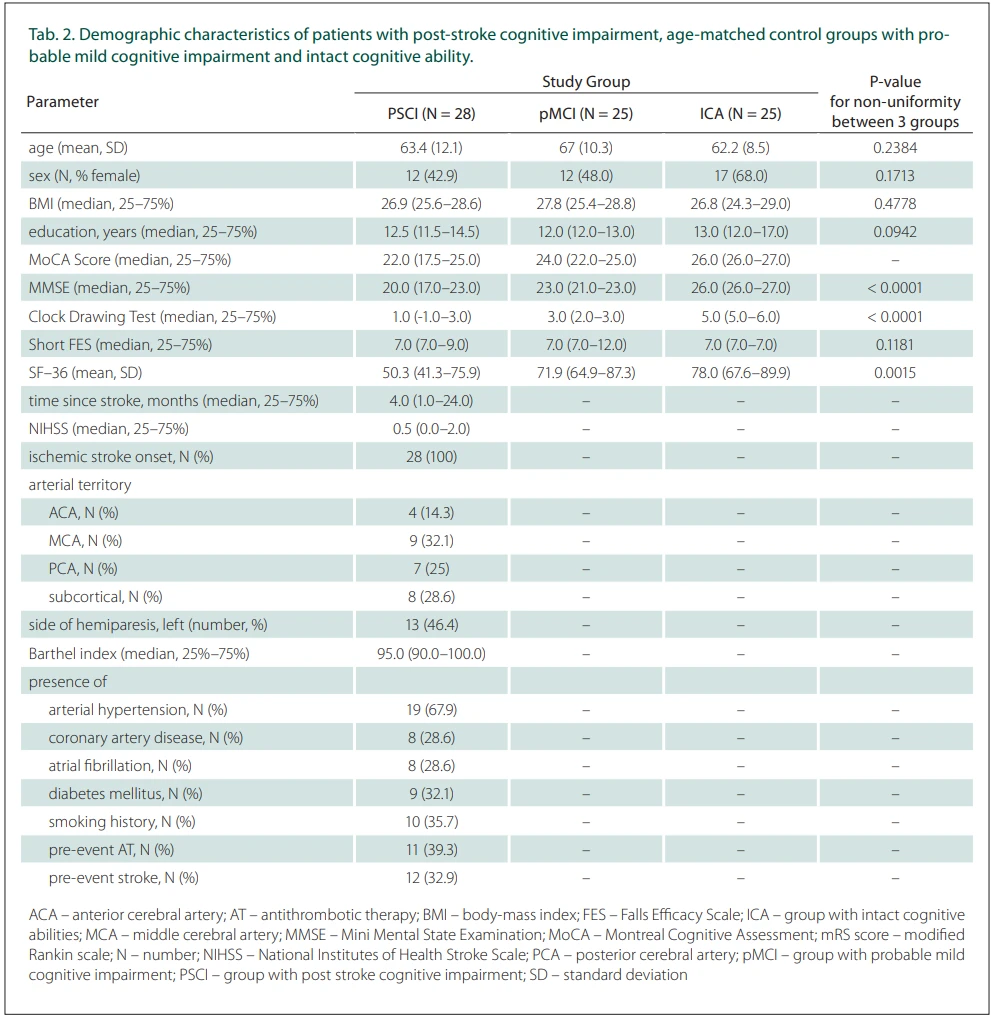
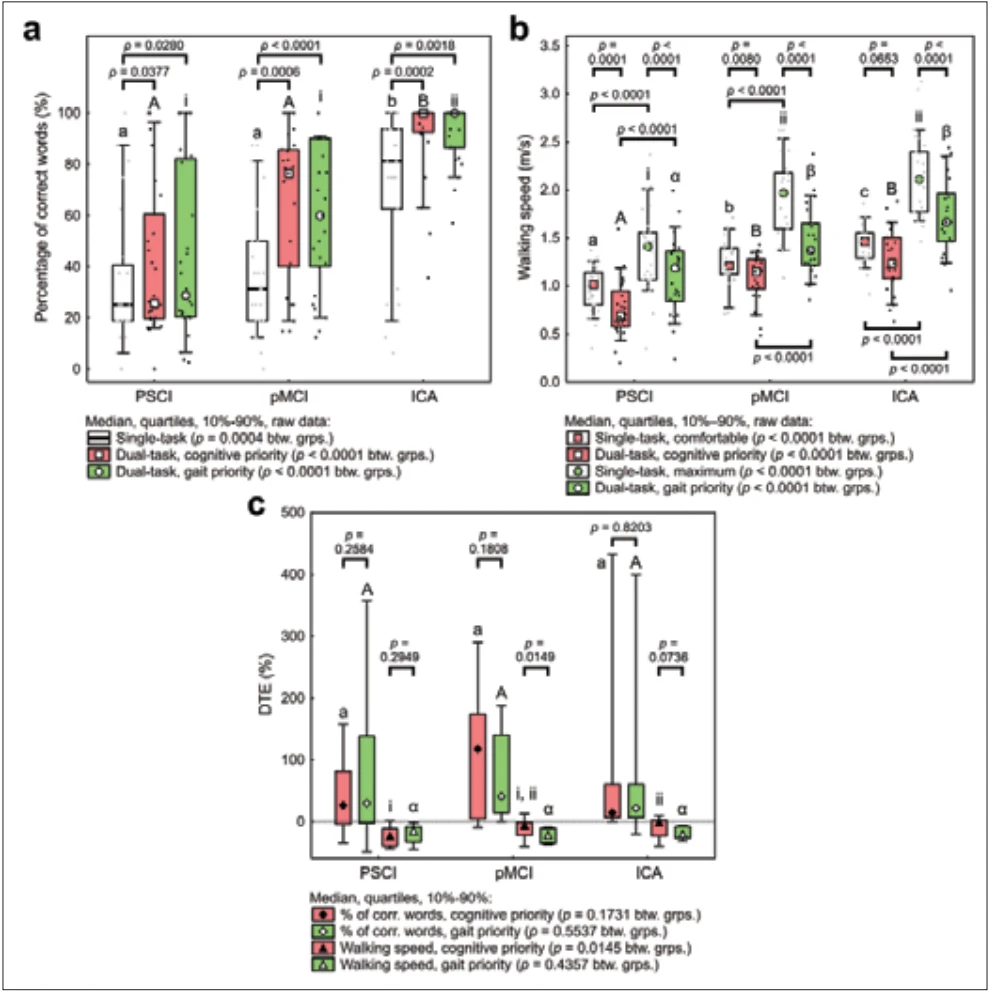
Table 2 provides an overview of the study participants‘ characteristics. The pMCI and ICA groups were divided based on MoCA, and the statistical significance of differences in cognitive ability was confirmed for the MMSE and CDT (both P < 0.0001). Regarding cognitive performance in the Stroop test, recorded values showed high variability, encompassing the entire range from 0 to 100% correct answers (Fig. 1a). The single-task condition revealed a statistically significant difference between the groups (P = 0.0004), with the ICA group markedly outperforming both the PSCI and pMCI groups. In the dual--task condition, all groups demonstrated a significant improvement in correct word percentages during both cognitive and gait prioritization compared to the single-task condition. Although still significant, this improvement was the smallest in the PSCI group, which therefore displayed the lowest percentage of correct words compared to pMCI and even more so compared to ICA in both cognitive and gait prioritization (both P < 0.0001).
Compared to cognitive performance, walking speed exhibited a much narrower distribution (Fig. 1b). A statistically significant difference was observed among the groups for all combinations of single - and dual-task conditions, as well as prioritization (all P < 0.0001). In all scenarios, the PSCI group performed the worst, followed by pMCI, with the ICA being the best performer. When comparing the dual-task condition to the corresponding single-task setting, all groups and prioritization strategies, except for the ICA group under cognitive prioritization, showed a statistically significant reduction in walking speed during the dual-task condition. The results also indicated a statistically significant improvement in walking speed across all groups and conditions when gait priority or maximum speed was prioritized.
When assessed with DTE, the previously described decline in walking speed alongside improved Stroop test performance in the dual-task condition was confirmed (Fig. 1c). Compared to analyzing absolute outcomes, which showed significant differences between groups, the relative method using DTE produced much more consistent results – the groups exhibited only marginally significant non-uniformity in DTE for walking speed with cognitive prioritization (P = 0.0145). Notably, the pMCI group showed considerably poorer DTE for walking speed during gait prioritization compared to cognitive prioritization. Regarding the percentage of correct words in the Stroop test, DTE exhibited high variability (due to the inherent fluctuations in Stroop outcomes) and did not mirror the group differences observed in the dual-task responses in the absolute outcomes assessment.
When subjects were classified into the “improved” / “no change” / “worsened” categories based on the DTEs of their walking speed and Stroop test results, the overall trend was that cognitive performance either improved or remained stable, while gait performance declined when both tasks were performed simultaneously. Notably, cognitive prioritization was linked to significant differences among the three participant groups. Improved cognition was observed in 5 out of 28 patients in the PSCI group, 13 out of 25 in the pMCI group, and 5 out of 25 in the ICA group (P = 0.0169). Deterioration in walking speed was evident in 21 out of 28 members of the PSCI group, 11 out of 25 in the pMCI group, and 9 out of 25 in the ICA group (P = 0.0087). Conversely, gait prioritized dual-task settings had similar effects across all groups, with 7/28, 7/25, and 6/25 (P = 1) showing improved cognition, and 23/28, 23/25, and 23/25 (P = 0.4931) exhibiting worsened walking speed in PSCI, pMCI, and ICA, respectively.
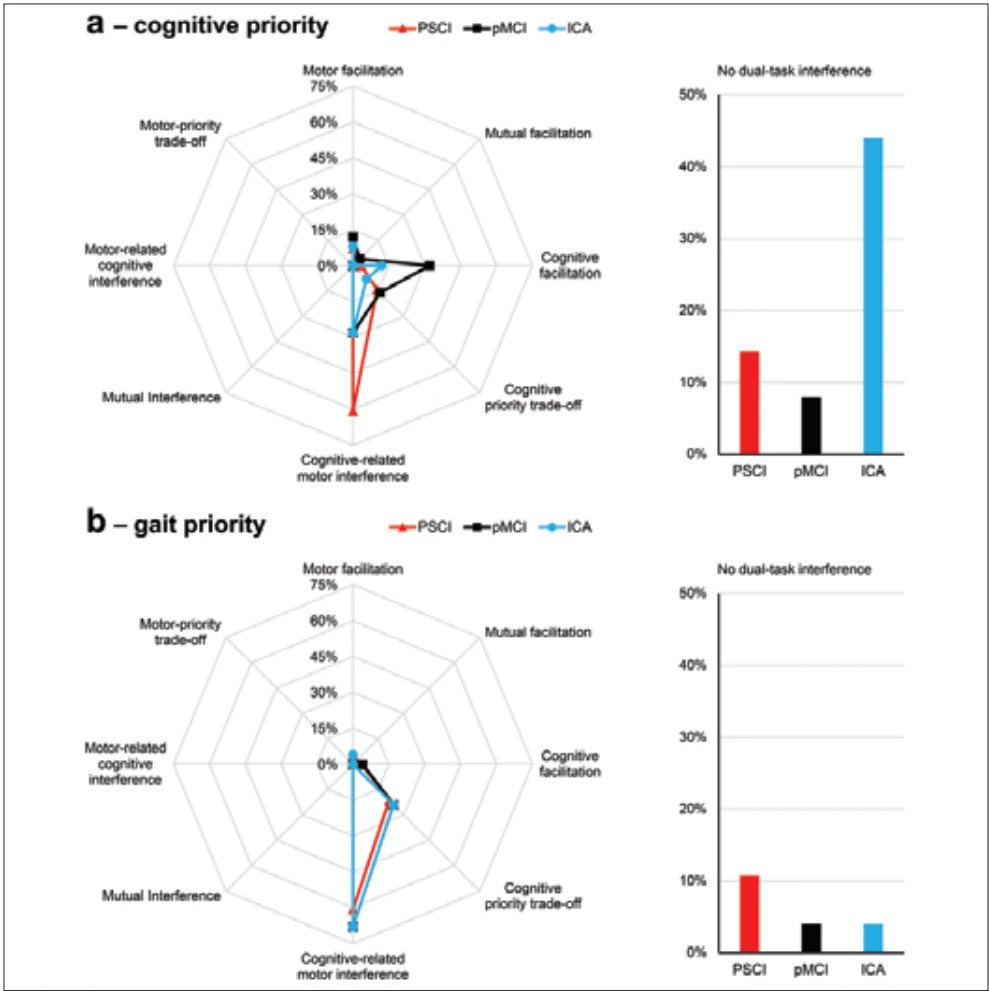
After combining the individual cognitive and motor DTE categories, the resulting classification patterns of cognitive-motor interference (Fig. 2) confirmed that the choice of cognitive or gait prioritization altered the interference patterns during dual--task performance. Cognitive-related motor interference (N = 17 in all groups) and cognitive prioritization trade-offs (N = 6 in all groups) were the most common patterns in gait prioritization. The cognitive prioritization produced greater differences in interference patterns, particularly for the pMCI and ICA groups. The pMCI group showed an increased preference for cognitive facilitation (N = 8) compared to the ICA group, which exhibited more cases of no dual-task interference (N = 11). Paradoxically, cognitive prioritization resulted in more frequent cases of motor facilitation compared to gait prioritization across all groups.
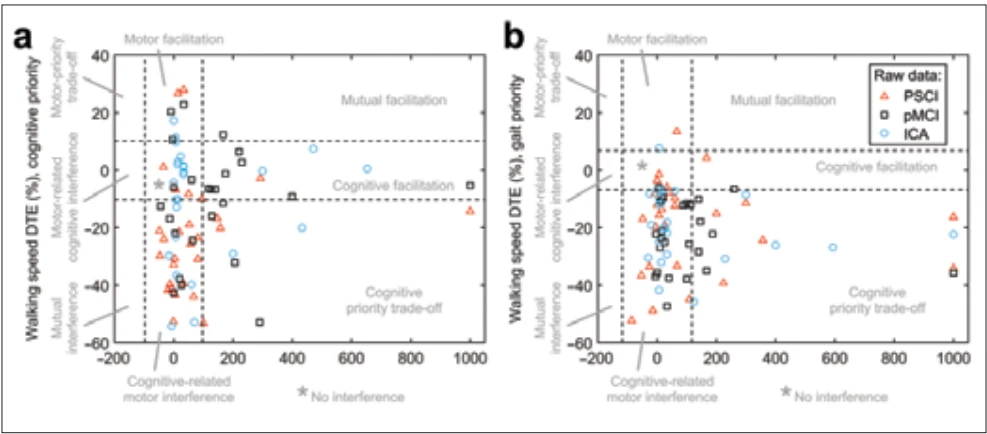
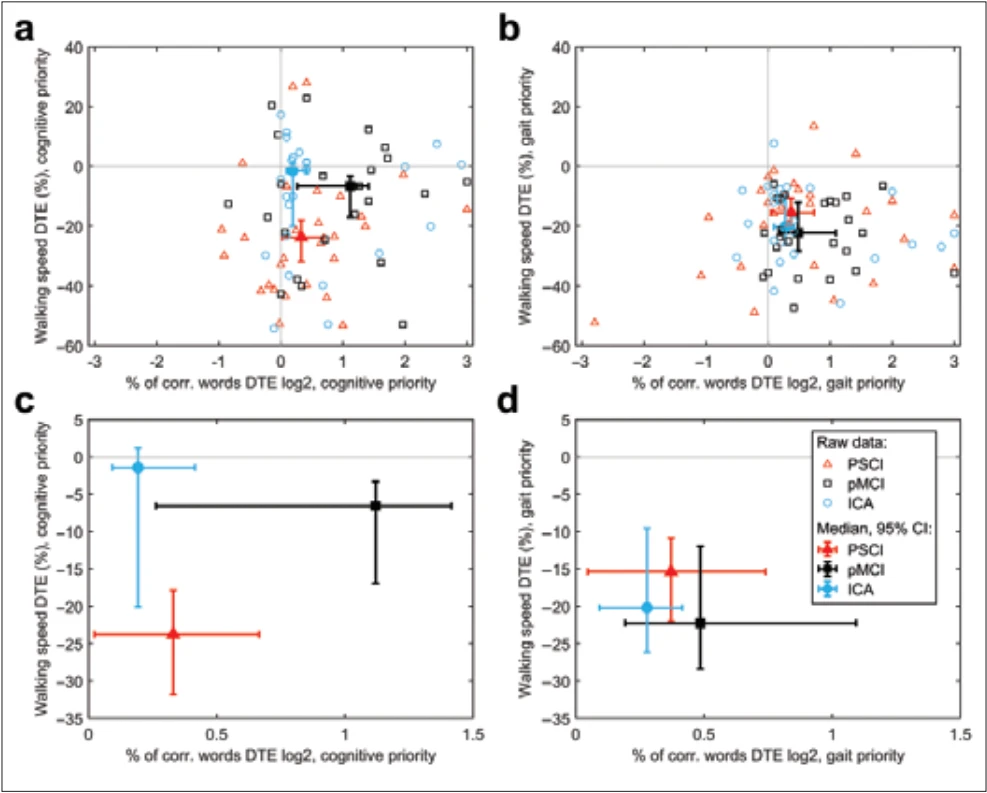
Simultaneous visualization of both DTEs confirmed the tendencies observed earlier through the categorical approach, but also revealed a significantly asymmetric distribution of the DTE for the Stroop test outcome in both cognitive and gait prioritization (Fig. 3). This asymmetry was eliminated when the alternative DTE log2 was used for this outcome (Fig. 4a, b). Despite the considerable visual overlap of the point clusters, suggesting high similarity of interference patterns between PSCI, pMCI, and ICA, visualizing the cluster midpoints using median DTEs with 95% confidence intervals uncovered some separation between groups, which was notably greater under the cognitive prioritization condition (Fig. 4c, d).
Discussion
This study investigated the patterns of cognitive-motor interference in the PSCI, pMCI, and ICA groups. The heterogeneity of the stroke cohort (PSCI) should be considered when interpreting the findings. Post-stroke cognitive, sensory, and motor impairments are known to vary according to lesion characteristics, and different lesion locations may be associated with distinct cognitive deficits and postural control impairments. As these functions contribute substantially to cognitive-motor interference during dual-task conditions, lesion-related variability may have influenced the observed dual-task performance [28,29]. In the single-task condition, the baseline cognitive and motor performances of the groups differed. The PSCI group exhibited the lowest scores in correct answers and walking speed, followed by the pMCI group, with the ICA group showing the highest results. Because the groups were categorized based on cognitive abilities, different scores in the visual-verbal Stroop test were expected. This version of the Stroop test is commonly used to evaluate patterns of cognitive decline and the ability to inhibit cognitive interference [25]. Regarding motor function, the results supported a link between cognitive decline in pre-dementia stages and slower walking speed at baseline. Furthermore, mild cognitive impairment and reduced walking speed have been found to share a common decrease in hippocampal volume [30].
In the dual-task condition, all groups increased their correct answers on the Stroop test regardless of prioritization, and all groups except the ICA group in cognitive prioritization showed a reduction in walking speed. When evaluated using DTE, the previously mentioned decline in walking speed and the increased Stroop test performance in the dual-task condition were confirmed. For the percentage of correct words in the Stroop test, DTE showed high variability (due to the variability of Stroop outcomes themselves) and did not reflect the differences in the dual-task response observed between the groups in the absolute outcome assessment. The PSCI group, which had the greatest improvement (from 10% to 20%), started with a low or zero percentage of correct answers, whereas the ICA group began with a high percentage of correct answers with no room for improvement (from 90% to 100% Stroop). Participants maintained a high level of correct responses during the Stroop task in the dual-task condition, suggesting they focused on cognitive performance, as shown in previous studies [31,32].
Thus, all groups in our study did not behave according to the “posture first” hypothesis as predicted by the task prioritization model, which suggests prioritizing walking or balance over cognitive task performance in the dual-task condition [25]. Bloem et al. [33] reported that patients with neurological impairments tend to prefer the “posture second” strategy, where cognitive tasks are given precedence over walking, leading to an increased risk of falls, as observed in our study across all groups examined. The dual-task prioritization model indicates that the choice of prioritizing walking or cognitive performance during dual-task walking depends on an individual‘s physiological and cognitive capacity, as well as the postural, sensorimotor, and cognitive demands of the tasks [31]. This shift in DTE – from reduced gait speed with dual-tasking to prioritized cognition during the second trial – may be due to practice effects, which are defined as performance improvements resulting from repeated exposure and increased familiarity with the test. Although practice effects can potentially introduce error, they may also hold prognostic value. The reduction of the interference effect during practice occurs regardless of age, but in the elderly, this reduction consistently happened throughout the training. Lower practice effects are associated with neurodegenerative biomarkers and future cognitive decline. Our study confirms this, as cognitive improvement was observed in only 5 of 28 patients in the PSCI group [34,35].
Dual-task prioritization strategies can be examined by adjusting task prioritization instructions. We confirmed that whether cognitive or gait prioritization was selected influenced interference patterns during dual-task performance across the PSCI, pMCI, and ICA groups. Interestingly, gait prioritization removed the differences observed between groups under cognitive prioritization. This evidence supports the greater diagnostic value of cognitive prioritization during dual--task assessment compared to gait prioritization. The ability to emphasize cognitive function during dual-task performance makes cognitive prioritization an ideal tool for reflecting the motor-cognitive interface. The beneficial effect of task prioritization can be explained by limited cognitive capacities and/or cognitive interference when two tasks compete for the same processing resources [12,14]. The cognitive prioritization led to larger differences in interference patterns, especially among the pMCI and ICA groups. The most common patterns involved cognitive-related motor interference and a trade-off with cognitive priority, but the MCI group showed a greater preference for cognitive facilitation compared to the ICA group, which experienced more cases without dual-task interference. Increasing evidence supports using dual-task assessments with cognitive prioritization as a tool to distinguish between different levels of cognitive impairment, as in our study [36,37]. Due to the limited attentional capacity of individuals with probable cognitive impairment, which hampers their cognitive abilities, interference in walking speed occurred when a visual-verbal Stroop test was added. Particularly for those with probable cognitive impairment, gait appeared to demand high levels of attention and required more cognitive resources, leading to greater dual--task decrements in this group [38].
The resulting classification patterns of cognitive-motor interference revealed that the most common patterns in gait and cognitive prioritization among post-stroke patients were cognitive-related motor interference and a trade-off in cognitive focus. These findings provide new evidence that different cognitive-motor interactions can occur in acute stroke survivors and that the chosen attention allocation strategy is likely influenced by task-level factors (such as difficulty or novelty) and person-level factors (such as cognitive and postural reserve) [37]. The frequent occurrence of cognitive-related motor interference during walking may suggest that post-stroke patients tend to prioritize attention on the cognitive task at the expense of gait performance. However, if slowing down is regarded as an adaptive safety strategy, it could be argued that members of the PSCI group were emphasizing postural control during walking. Therefore, it is reasonable to hypothesize that post-stroke patients who perceive the cognitive task as more challenging will, under dual-task conditions, prioritize this task over maintaining their usual walking speed [3]. Patients with slower walking speeds after a stroke may lack the automaticity needed to ‘free up’ executive resources, thereby limiting their ability to improve dual-task walking. In contrast, those who walk faster may have greater executive resources available to enhance this ability. In fact, gait impairment – especially in individuals with cognitive impairment – has been observed even in stroke patients without leg weakness, coordination issues, or visuospatial problems [38].
Limitations and future directions
The first limitation of this study is that cognitive status was determined using the screening tools MoCA and MMSE. Consequently, group allocation represented a screening-based classification and should not be interpreted as a formal clinical diagnosis of cognitive impairment.
Due to variations in motor performance costs depending on the type of cognitive task, the study was limited by selecting only a single cognitive modality during dual-task performance. There is no assurance that differences in the tasks used truly reflect different levels of cognitive and/or motor difficulty, or the extent of increased difficulty these changes indicate. Another limitation of the study is the lack of standardization in dual-task paradigms, which may account for the heterogeneity of results. A recommendation for future research is to assess the Visual-Stroop test using a visuomotor reaction time during dual-task performance and to avoid the number of repetitions to prevent potential rapid learning effects.
Conclusion
The DTE evaluation confirmed a decline in walking speed and an increase in performance on the Stroop test, regardless of prioritization across all tested groups. The patterns most commonly observed in post-stroke patients were cognitive-related motor interference and the cognitive priority trade-off. Cognitive prioritization altered the patterns of interference during dual-task performance among PSCI, pMCI, and ICA groups. This evidence supports the greater diagnostic value of cognitive prioritization during dual-task assessment compared to gait prioritization. Our study endorses the use of dual-task examinations with cognitive prioritization as a tool to differentiate progression across various levels of cognitive impairment.
Ethical principles
The entire study was conducted in accordance with the Helsinki Declaration of 1975 (as revised in 2004 and 2008). The study received approval from the Ethical Committee of the University Hospital Pilsen and the Faculty of Medicine in Pilsen, approval ID: EK-516/23 (4. 1. 2024). All participants provided written informed consent to participate.
Availability of data and materials
The dataset supporting the conclusions of this article is available from the authors upon reasonable request. Iva Hereitová should be contacted for such requests via email: ivlckova@kfe.zcu.cz.
Conflict of interest
The authors declare they have no potential conflicts of interest concerning drugs, products, or services used in the study.
Sources
1. Feigin VL, Krishnamurthi RV, Parmar P et al. Update on the global burden of ischemic and hemorrhagic stroke in 1990-2013: the GBD 2013 study. Neuroepidemiology 2015; 45 (3): 161–176. doi: 10.1159/000441085.
2. Jokinen H, Melkas S, Ylikoski R et al. Post-stroke cognitive impairment is common even after successful clinical recovery. Eur J Neurol 2015; 22 (9): 1288–1294. doi: 10.1111/ene.12743.
3. Fride Y, Adamit T, Maeir A et al. What are the correlates of cognition and participation to return to work after first ever mild stroke?. Top Stroke Rehabil 2015; 22 (5): 317–325. doi: 10.1179/1074935714Z.0000000013.
4. Galski T, Bruno RL, Zorowitz R et al. Predicting length of stay, functional outcome, and aftercare in the rehabilitation of stroke patients. the dominant role of higher-order cognition. Stroke 1993; 24 (12): 1794–1800. doi: 10.1161/01.str.24.12.1794.
5. Melkas S, Oksala NK, Jokinen H et al. Poststroke dementia predicts poor survival in long-term follow-up: influence of prestroke cognitive decline and previous stroke. J Neurol Neurosurg Psychiatry 2009; 80 (8): 865–870. doi: 10.1136/jnnp.2008.166603.
6. Al-Yahya E, Dawes H, Smith L et al. Cognitive motor interference while walking: a systematic review and meta--analysis. Neurosci Biobehav Rev 2011; 35 (3): 715–728. doi: 10.1016/j.neubiorev.2010.08.008.
7. Hofheinz M, Mibs M, Elsner B. Dual task training for improving balance and gait in people with stroke. Cochrane Database Syst Rev 2016; 2016 (10): CD012403. doi: 10.1002/14651858.CD012403.
8. Abenethy B. Dual-task methodology and motor skills research: some applications and methodological constraints. J Hum Mov Stud 1988; 14 : 101–132.
9. Leone C, Feys P, Moumdjian L et al. Cognitive-motor dual-task interference: a systematic review of neural correlates. Neurosci Biobehav Rev 2017; 75 : 348–360. doi: 10.1016/j.neubiorev.2017.01.010.
10. Dreher JC, Grafman J. Dissociating the roles of the rostral anterior cingulate and the lateral prefrontal cortices in performing two tasks simultaneously or successively. Cereb Cortex 2003; 13 (4): 329–339. doi: 10.1093/cercor/13.4.329.
11. Worringer B, Langner R, Koch I et al. Common and distinct neural correlates of dual-tasking and task-switching: a meta-analytic review and a neuro-cognitive processing model of human multitasking. Brain Struct Funct 2019; 224 (5): 1845–1869. doi: 10.1007/s00429-019-01870-4.
12. Lehle C, Hübner R. Strategic capacity sharing between two tasks: evidence from tasks with the same and with different task sets. Psychol Res 2009; 73 (5): 707–726. doi: 10.1007/s00426-008-0162-6.
13. Wang XQ, Pi YL, Chen BL et al. Cognitive motor interference for gait and balance in stroke: a systematic review and meta-analysis. Eur J Neurol 2015; 22 (3): 555–e537. doi: 10.1111/ene.12616.
14. Montero-Odasso M, Almeida QJ, Bherer L et al. Consensus on shared measures of mobility and cognition: from the canadian consortium on neurodegeneration in aging (CCNA). J Gerontol A Biol Sci Med Sci 2019; 74 (6): 897–909. doi: 10.1093/gerona/gly148.
15. Davis DH, Creavin ST, Yip JL et al. Montreal cognitive assessment for the detection of dementia. Cochrane Database Syst Rev 2021; 7 (7): CD010775. doi: 10.1002/14651858.CD010775.pub3.
16. Nascimbeni A, Caruso S, Salatino A et al. Dual task-related gait changes in patients with mild cognitive impairment. Funct Neurol 2015; 30 (1): 59–65.
17. Claus JJ, Berghout BBP, Ikram MK et al. Validity of stroke severity assessment using medical records in a population-based cohort. J Stroke Cerebrovasc Dis 2023; 32 (4): 106992. doi: 10.1016/j.jstrokecerebrovasdis.2023.106992.
18. Lee YC, Lee SC, Chiu EC. Practice effect and test-retest reliability of the mini-mental state examination-2 in people with dementia. BMC Geriatr 2022; 22 (1): 67. doi: 10.1186/s12877-021-02732-7.
19. Hoops S, Nazem S, Siderowf AD et al. Validity of the moca and MMSE in the detection of MCI and dementia in parkinson disease. Neurology 2009; 73 (21): 1738–1745. doi: 10.1212/WNL.0b013e3181c34b47.
20. Duro D, Tábuas-Pereira M, Freitas S et al. Validity and clinical utility of different clock drawing test scoring systems in multiple forms of dementia. J Geriatr Psychiatry Neurol 2018; 31 (3): 114–122. doi: 10.1177/0891988718774432.
21. Jonasson SB, Nilsson MH, Lexell J. Psychometric properties of the original and short versions of the falls efficacy scale-international (FES-I) in people with parkinson‘s disease. Health Qual Life Outcomes 2017; 15 (1): 116. doi: 10.1186/s12955-017-0689-6.
22. Ezzati A, Zammit AR, Katz MJ et al. Health-related quality of life, cognitive performance, and incident dementia in a community-based elderly cohort. Alzheimer Dis Assoc Disord 2019; 33 (3): 240–245. doi: 10.1097/WAD.0000000000000324.
23. Ohura T, Hase K, Nakajima Y et al. Validity and reliability of a performance evaluation tool based on the modified barthel index for stroke patients. BMC Med Res Methodol 2017; 17 (1): 131. doi: 10.1186/s12874-017-0409-2.
24. Hosoi Y, Kamimoto T, Sakai K et al. Estimation of minimal detectable change in the 10-meter walking test for patients with stroke: a study stratified by gait speed. Front Neurol 2023; 14 : 1219505. doi: 10.3389/fneur.2023.1219505.
25. Wollesen B, Voelcker-Rehage C. Differences in cognitive-motor interference in older adults while walking and performing a visual-verbal Stroop task. Front Aging Neurosci 2019; 10 : 426. doi: 10.3389/fnagi.2018.00426.
26. Subramaniam AP, Oyedeji CI, Parikh JS et al. Cognitive-motor dual-task interference in adults with sickle cell disease. Gait Posture 2023; 102 : 164–170. doi: 10.1016/j.gaitpost.2023.03.009.
27. Plummer P, Eskes G, Wallace S et al. Cognitive-motor interference during functional mobility after stroke: state of the science and implications for future research. Arch Phys Med Rehabil 2013; 94 (12): 2565–2574.e6. doi: 10.1016/j.apmr.2013.08.002.
28. Bhatt T, Subramaniam S, Varghese R. Examining interference of different cognitive tasks on voluntary balance control in aging and stroke. Exp Brain Res 2016; 234 (9): 2575–2584. doi: 10.1007/s00221-016-4662-0.
29. Saverino A, Waller D, Rantell K et al. The role of cognitive factors in predicting balance and fall risk in a neuro-rehabilitation setting. PLoS One 2016; 11 (4): e0153469. doi: 10.1371/journal.pone.0153469.
30. Rosso AL, Verghese J, Metti AL et al. Slowing gait and risk for cognitive impairment: the hippocampus as a shared neural substrate. Neurology 2017; 89 (4): 336–342. doi: 10.1212/WNL.0000000000004153.
31. van Iersel MB, Kessels RP, Bloem BR et al. Executive functions are associated with gait and balance in community-living elderly people. J Gerontol A Biol Sci Med Sci 2008; 63 (12): 1344–1349. doi: 10.1093/gerona/63.12.1344.
32. Wollesen B, Schulz S, Seydell L et al. Does dual task training improve walking performance of older adults with concern of falling?. BMC Geriatr 2017; 17 (1): 213. doi: 10.1186/s12877-017-0610-5.
33. Bloem BR, Grimbergen YA, van Dijk JG et al. The “posture second” strategy: A review of wrong priorities in Parkinson‘s disease. J Neurol Sci 2006; 248 (1-2): 196–204. doi: 10.1016/j.jns.2006.05.010.
34. Burger L, Fay S, Angel L et al. Benefit of practice of the stroop test in young and older adults: pattern of gain and impact of educational level. Exp Aging Res 2020; 46 (1): 52–67. doi: 10.1080/0361073X.2019.1693013.
35. Jutten RJ, Grandoit E, Foldi NS et al. Lower practice effects as a marker of cognitive performance and dementia risk: a literature review. Alzheimers Dement (Amst) 2020; 12 (1): e12055. doi: 10.1002/dad2.12055.
36. Montero-Odasso M, Pieruccini-Faria F, Ismail Z et al. CCCDTD5 Recommendations on early non cognitive markers of dementia: a canadian consensus. Alzheimers Dement (N Y) 2020; 6 (1): e12068. doi: 10.1002/trc2.12068.
37. Beurskens R, Brueckner D, Muehlbauer T. Effects of motor versus cognitive task prioritization during dual-task practice on dual-task performance in young adults. Front Psychol 2020; 11 : 581225. doi: 10.3389/fpsyg.2020.581225.
38. Wollesen B, Voelcker-Rehage C, Regenbrecht T et al. Influence of a visual-verbal stroop test on standing and walking performance of older adults. Neuroscience 2016; 318 : 166–177. doi: 10.1016/j.neuroscience.2016.01.031.
39. Feld JA, Plummer P. Patterns of cognitive-motor dual-task interference post stroke: an observational inpatient study at hospital discharge. Eur J Phys Rehabil Med 2021; 57 (3): 327–336. doi: 10.23736/S1973-9087.20.06273-5.
40. Collett J, Fleming MK, Meester D et al. Dual-task walking and automaticity after stroke: insights from a secondary analysis and imaging sub-study of a randomised controlled trial. Clin Rehabil 2021; 35 (11): 1599–1610. doi: 10.1177/02692155211017360.
Labels
Paediatric neurology Neurosurgery NeurologyArticle was published in
Czech and Slovak Neurology and Neurosurgery
2026 Issue 5
Most read in this issue
- Safety aspects of transitioning from alteplase to tenecteplase in the treatment of acute ischemic stroke – a narrative review
- 100 years of the Czech Department of Neurology, Charles UniversityThe fates of Czech and German neurologists in Prague from 1938 to 1945
- Anatomy, etiology, and graphic imaging findings of hypertrophic olivary degeneration – description of 10 cases
- Patterns of cognitive-motor interference in patients with post-stroke cognitive impairment